How to Choose the Right Excavator
Share Box
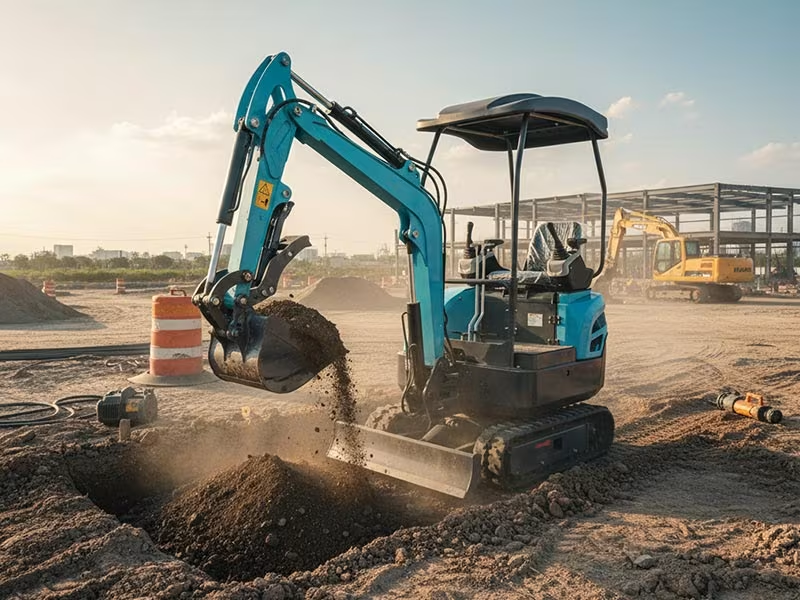
Excavators are indispensable machinery in construction and agricultural operations. Whether it’s earthmoving, road construction, or farm and irrigation projects, choosing the right excavator can significantly improve efficiency and reduce costs. With a wide range of models available, selecting the best one for your needs can be challenging. This guide covers key specifications, types, applications, and buying tips to help you make an informed decision.
Key Features to Consider
Engine Power
The engine is the heart of an excavator, directly affecting performance and fuel efficiency. Choosing a powerful and stable engine ensures efficient operation under various conditions.
Operating Weight & Excavation Capacity
Operating efficiency is closely related to the excavator’s weight and bucket capacity. A balanced machine with suitable weight and bucket size performs optimally in earthmoving tasks.
Digging Depth & Reach
Select the digging depth and reach according to your project requirements to ensure the machine can complete tasks without limitations.
Reliability & Durability
High-strength steel structures and quality hydraulic systems ensure long-term stability. Reliable machines reduce maintenance costs and downtime.
Attachments & Versatility
Excavators can be equipped with various attachments such as buckets, grapples, or hydraulic breakers, enhancing flexibility for different tasks.
Types of Excavators
| Type | Description |
|---|---|
| Mini Excavator | Ideal for small construction sites, landscaping, and farms, compact and highly maneuverable |
| Medium Excavator | Suitable for medium-scale earthmoving and general construction, offering higher efficiency |
| Large Excavator | Used for large projects, mining, and infrastructure construction, with high power and wide operational range |
| Crawler | Stable, ideal for uneven terrain and heavy-duty projects |
| Wheeled | Faster mobility, suitable for urban roads or short-distance operations |
Tips for Buying
- Choose Based on Site Conditions
Mini excavators for small sites; medium or large for major projects. - Consider Budget & Maintenance
Cost-effective machines reduce long-term expenses. - Reliable Brand & After-Sales
A reputable brand with fast support minimizes project risks. - Attachment Options
Select attachments based on tasks to enhance machine versatility.
FAQ
Q1: Which excavator is suitable for small projects?
Mini excavators are ideal for small construction and landscaping projects due to compact size and high maneuverability.
Q2: How to assess excavator performance?
Pay attention to engine power, operating weight, hydraulic system, and bucket capacity.
Q3: What to consider when exporting excavators?
Ensure compliance with target market standards, such as CE certification or emission regulations, and consider logistics and after-sales support.
Q4: Difference between crawler and wheeled excavators?
Crawlers are stable and suitable for rough terrain, while wheeled excavators offer faster mobility for urban or flat areas.
Conclusion
Choosing the right excavator can greatly improve operational efficiency and reduce maintenance costs. Selecting the appropriate model based on site conditions, budget, and tasks, while considering brand reputation and after-sales support, ensures smooth project completion.